

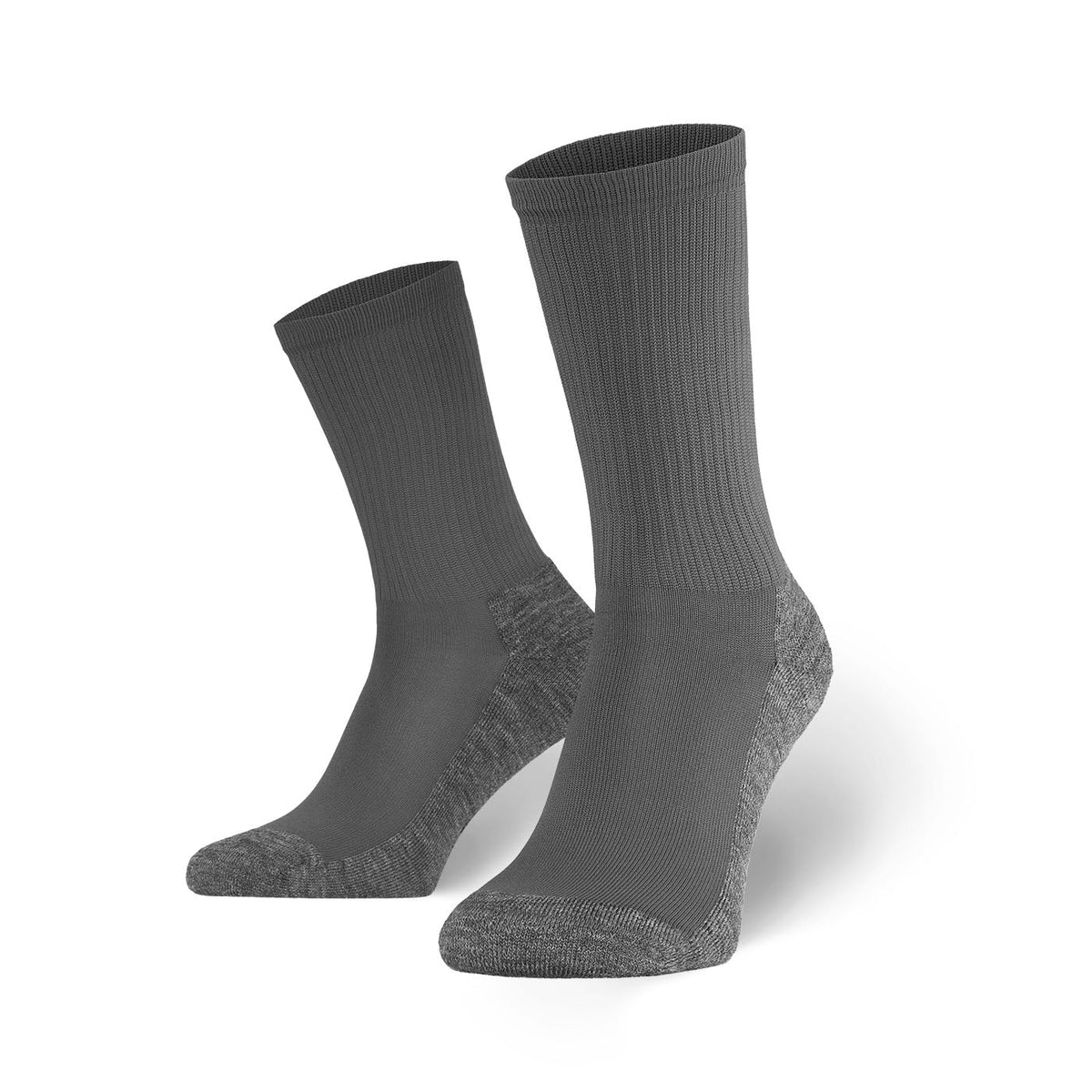
Anyone who spends many hours in work shoes quickly notices small differences between socks. Too much fabric, a fold under the sole, or an unsuitable cuff can become bothersome throughout the day. The right choice therefore starts with your shoes and your work environment.
How much room is left in the shoe?
Try work socks with the shoes and insoles you actually use. A thick sock takes up more space than a lightweight model. You should check particularly around the toes and instep whether the combination feels comfortable. Padding is only helpful if there is enough room for it.
Thin or thick work socks?
- Warm indoor environments and lots of movement: Start by comparing lighter models. Check whether their padding is sufficient for you.
- Changing conditions: A medium-weight model can be a suitable starting point. Testing it in your own shoe remains crucial.
- Cool workplaces: Compare thicker models as long as they do not make the shoe too tight. Also consider how much you move.
In our selection of work socks, you will find Merino Socks Light Classic, Merino Light Plus Classic, and Merino Socks Classic, among others. The models differ in their construction and material thickness. The information on the product page will help you compare them.
Assessing padding carefully
Pay attention to where the sock is padded: on the sole, at the heel, or in the toe area. At the same time, make sure it fits smoothly. A lot of padding cannot replace a well-fitting shoe or a suitable insole. Test the combination for a few minutes while standing and walking before planning to wear it for a full workday.
Consider material and care together
The material name alone does not tell you how a sock will feel in your work shoe. Compare the composition, knit thickness, and care instructions of the specific model. Also consider how you rotate several pairs in everyday use. If one pair has become damp, having a spare pair is more practical than continuing to wear the damp pair until the end of the workday.
The right length for mid-cut and high-cuff work shoes
With high-cut shoes, the sock should extend above the shoe opening. This allows the shoe edge to rest against the sock cuff. With lower-cut shoes, you can compare shorter models. In both cases, fabric should not bunch up around the ankle.
What applies to safety shoes?
If specific safety shoes or special clothing are required for your workplace, follow your employer's and the shoe manufacturer's specifications when choosing socks as well. A regular sock model is not automatically suitable for every special protective requirement. Our general selection guide does not replace these requirements.
Frequently asked questions about work socks
Should I buy work socks in a larger size?
Start by using your usual EU shoe size as a guide. Larger socks can create excess fabric. Check the position of the heel and toe and use the size guide if you are unsure.
Which sock is suitable for long periods of standing?
Pay particular attention to how the sock fits in the shoe, an appropriate material thickness, and comfortably positioned padding. A softer model is not automatically better if it makes the shoe tighter.
How do I find a suitable Bolter Socks model?
Compare work socks by length and thickness. If you tell us about your work environment, shoe size, and the type of shoe you use, we will be happy to assist you with personalized selection.
Share:
Why do socks slip? How to find the right size and fit