

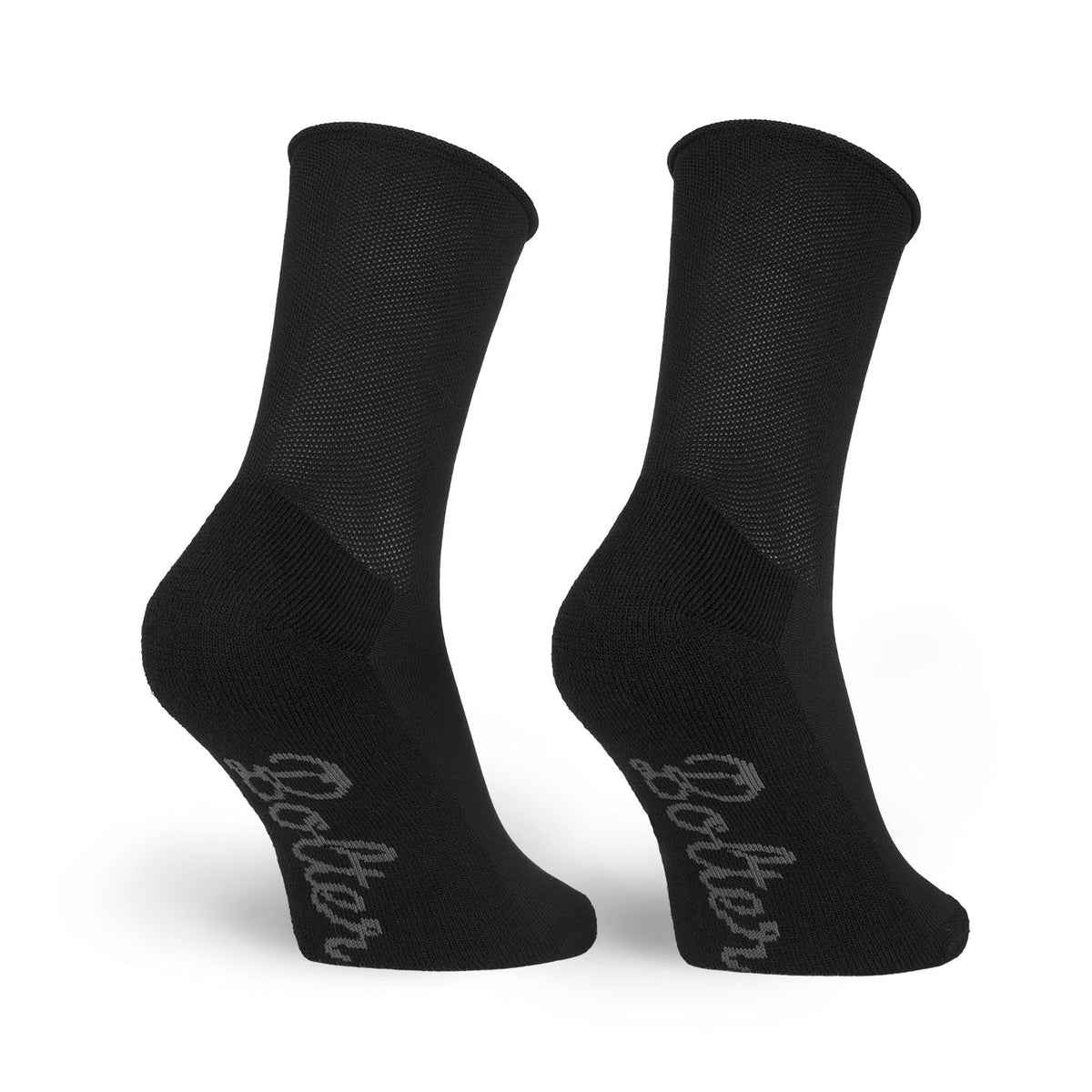
You pull your socks up, and shortly afterward they are sitting in the wrong place again? Before simply buying a smaller size, check where the sock is slipping. A heel that slides under the foot, a shaft that sags, and a sock that disappears into the shoe are different fit problems.
1. Start with your usual shoe size
First, choose the size range that includes your EU shoe size. For example, with a model offering the ranges 35–38, 39–42, 43–46, and 47–50, shoe size 40 falls within the 39–42 range. This classification does not automatically apply to every product: the sizes offered on the respective product page are the authoritative reference.
A deliberately undersized sock is not a reliable solution for slipping. It may feel tight around the toes or pull the heel out of its intended position. If you are unsure between two sizes, advice for the specific model is more helpful than a general rule.
2. Check the shaped heel
First pull the sock over your foot and position the heel area on your heel. Only then adjust the shaft. If you simply pull the sock up firmly by the cuff, the foot section may shift. Make sure there is no large excess of fabric in front of the toes and that no wrinkles gather under the foot.
3. Distinguish between cuff and shaft length
A short sneaker cut fits differently from a classic sock or a knee-high sock. If the shaft length does not suit the shoe, the shoe opening may meet the sock at an unfavorable point. Therefore, compare not only the size but also the length.
Cuff styles also intentionally differ. A rolled edge or a model without an elastic cuff has a different construction from a sporty cuff. You should check which style feels comfortable when trying the socks on. A very tight cuff is not automatically the better choice.
4. Check the combination with your shoes
First test the socks without shoes and then with your usual pair. If they slip only in a particular shoe, also assess the shoe's heel fit and the space inside. In a very roomy shoe, the foot may move more; in a tight shoe, excess fabric may bunch up. The sock alone cannot compensate for an ill-fitting shoe.
5. Check condition and care
Compare a frequently worn pair with a newer pair of the same model. If the shape or cuff has changed significantly, the condition may be a factor. Wash and dry the socks according to the product-specific care instructions. Deliberately washing them in hot water to shrink them is not a controllable way to adjust the size.
Your try-on checklist
- My shoe size falls within the offered size range.
- The toe area lies smoothly without squeezing my toes together.
- The heel area sits on my heel.
- No wrinkles form under the foot or around the ankle when walking.
- The shaft suits the height of my shoes.
- The cuff feels comfortable.
What helps if the size still does not fit?
When contacting us for size advice, tell us your usual EU shoe size, the model you want, and where your previous socks slip. This makes it possible to narrow down the selection more precisely.
On the product pages, you will find the available sizes and the expandable size guide. For a selection based on use and preferences, use the Bolter Sock Finder.
Share:
Ski socks: Thin or thick - what fits your ski boot?
Which socks to wear with work shoes? Choices for long workdays