

Merino or cotton: Which socks are the better choice for everyday wear? The answer depends on how you wear them. A thin sock in an office shoe has different requirements than a padded pair in a hiking boot. The fiber name is a good starting point for comparison, but it is not yet a complete purchasing decision.
What distinguishes the materials?
Merino wool is an animal-based natural fiber, while cotton is plant-based. Both can absorb moisture. Wool can absorb water vapor within the fiber and release it again; its natural crimp helps trap insulating air. These properties are described in the Woolmark technical information on wool's breathability. However, how comfortable a finished sock feels also depends on the yarn, knit structure, material blend, and shoe.
Which questions help when comparing?
- How warm is your work or leisure environment? Compare socks of a similar thickness. Comparing a thick merino model with a very thin cotton sock mixes material and construction.
- How much room is left in the shoe? The sock should fit smoothly. Even a comfortable material helps little if fabric bunches up under the foot.
- How does the pair feel against your skin? Check the toe, heel, and cuff. Your personal wearing comfort cannot be determined from a percentage alone.
- Does the care routine fit your everyday life? Read the label on the specific product. “Cotton” or “Merino” alone does not imply a specific washing temperature.
When is it worth considering merino socks?
If you are looking for a sock for changing temperatures or long days in closed shoes, it is worth comparing different merino constructions. For a snug everyday shoe, it is best to start with a lightweight model. For more cushioning or a more substantial feel, you can compare heavier models, provided your shoe has enough room for them.
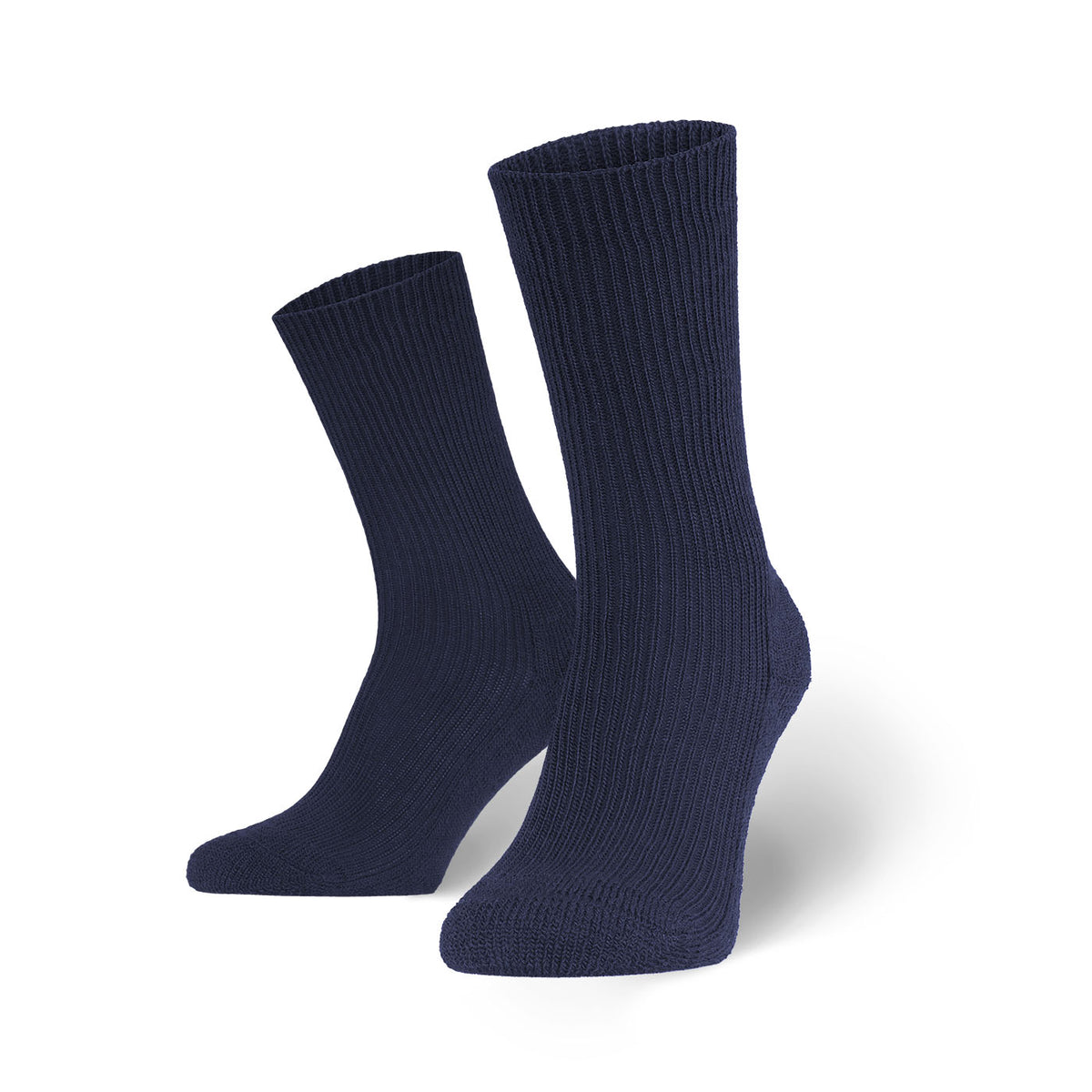
For example, the Bolter Merino Socks Classic combine 82 percent merino wool with 18 percent polyamide and a plush sole. This is a specific construction, not a general characteristic of all merino socks. You can also find lighter alternatives in the work sock range.
When does cotton remain a suitable choice?
If you feel comfortable in your cotton socks, they fit well in your shoes, and they suit your washing routine, you do not need to replace them across the board. If you want to change something, identify the problem first: Is cushioning lacking, is the thickness unsuitable, or is the cuff uncomfortable? Changing the material alone will not solve all of these issues.
How to compare two pairs fairly
- Choose a similar length and material thickness.
- Try on both pairs with the same shoes.
- Pay attention to creases, toe room, and heel fit.
- Assess the wearing comfort over a comparable period.
- Then check the care instructions and the condition after washing.
Are merino socks always made of 100 percent wool?
No. The product name does not replace the material information. Blends can be designed to combine different requirements. Therefore, read the model's complete composition before buying.
Would you like to narrow down your selection? Use the Bolter Sock Finder or tell us through consultation which shoes you wear and what you would like your new sock to do better.
Share:
Which socks to wear with work shoes? Choices for long workdays
Why do merino socks contain polyamide? Material blends explained