

Are you looking for merino socks and also see “polyamide” on the label? Is that a contradiction? No: A sock can combine merino wool with other fibers. What matters is what purpose the blend serves and how it is processed. A high wool content provides information about the material, but it is not a complete assessment of quality.
What purpose does polyamide serve?
Polyamide belongs to the group of synthetic fibers; nylon is a well-known name within this material group. In socks, it can help improve abrasion resistance. Woolmark also describes the combination of wool and nylon for this purpose in its technical information on wool socks.
However, this does not mean that every blend is equally durable. Yarn thickness, construction, stress inside the shoe, and care also play a role. The material specification alone does not promise a particular number of days of wear.
A specific example from the Bolter Socks range
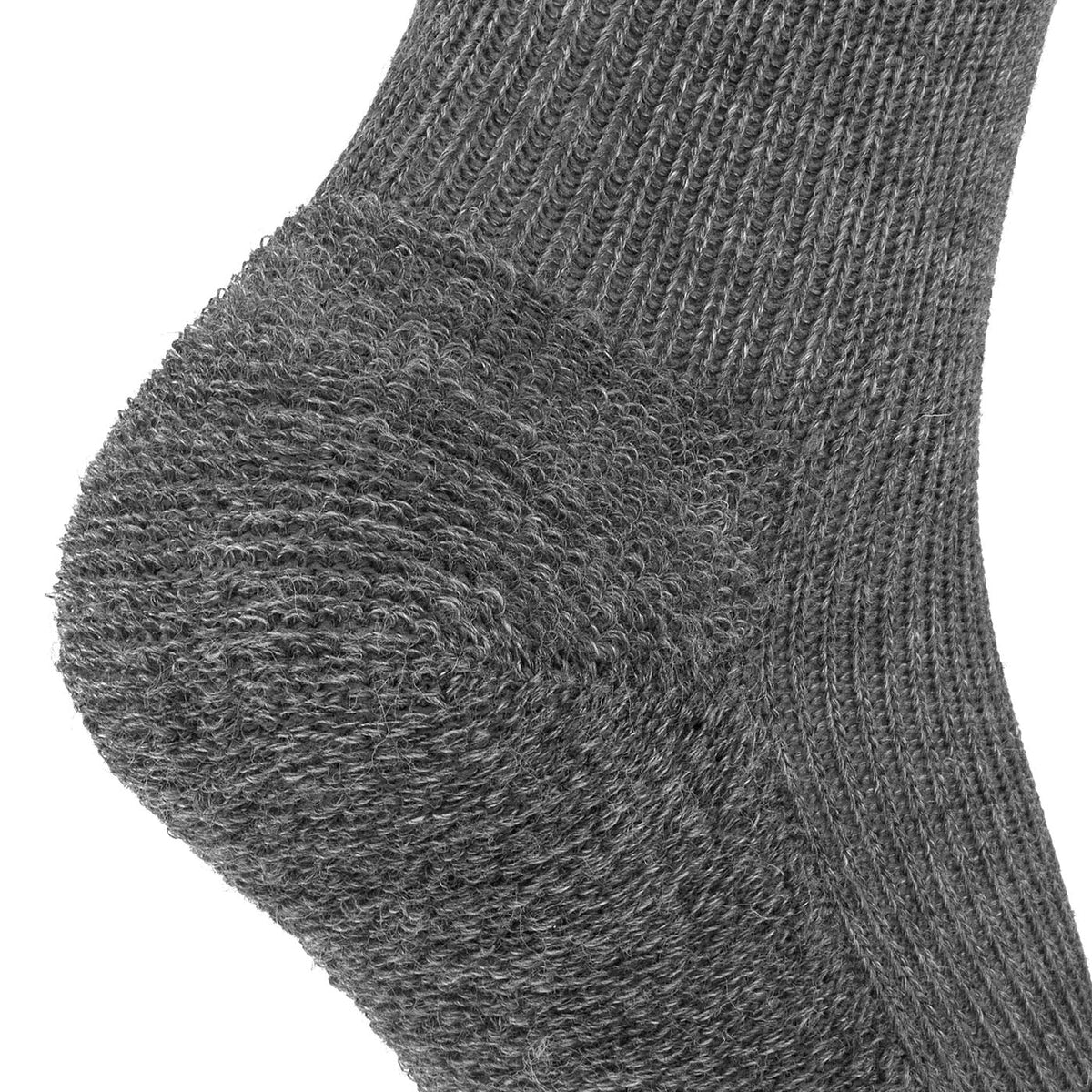
According to the material information, our Merino Socks Classic consist of 82 percent merino wool and 18 percent polyamide. They also feature a plush sole. When choosing, you should consider this information together: The percentages describe the composition, while the plush sole describes part of the construction.
Another model may have a different blend and still be better suited to your needs. Therefore, always compare the information for the specific product, rather than just the designation “merino sock.”
What percentage figures do not show
- Distribution in the knit: The overall percentage does not show which fiber is used in which area.
- Thickness: The same wool content can produce a different feel when used with yarns of different weights.
- Padding: A plush sole is a knitted construction and is not simply another term for a high wool content.
- Fit inside the shoe: Size, heel shape, and available shoe width remain separate selection criteria.
Is polyamide the same as elastane?
No. The names refer to different fiber groups. Read the composition in full instead of automatically assuming that a polyamide content indicates a particular elastic cuff or a particular degree of stretch. The structure of the knit also affects how much a sock can stretch.
How should merino blends be cared for?
A synthetic content does not turn a wool sock into an endlessly washable everyday textile. The care instructions remain decisive. For the Merino Socks Classic, for example, Bolter Socks recommends a delicate wash at up to 30 °C and no tumble drying. Check this information again for each model and sort your laundry accordingly.
A short checklist before buying
- Read the complete material composition.
- Match the thickness and padding to the intended shoe.
- Pay attention to information about the heel, toe, and cuff.
- Choose the right size.
- Check whether the care requirements fit your routine.
So, when making your next choice, you can ask a more specific question: Does this blend, together with this construction, suit my everyday needs? The Sock Finder can help narrow down your options. Our personal consultation can answer questions about individual models.
Share:
Merino or cotton: Which socks suit your everyday life?
Socks without elastic cuffs: roll-top, comfort, and fit explained