

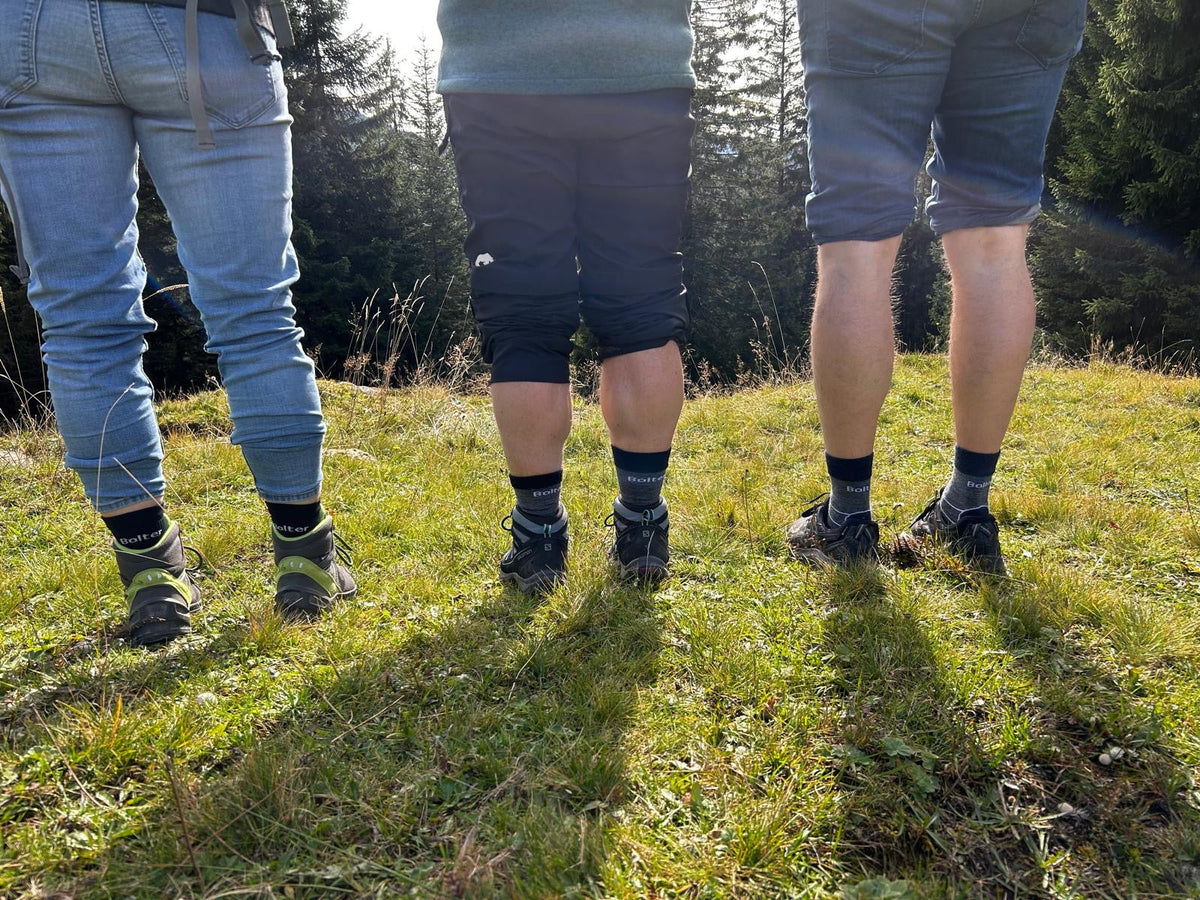
The right hiking socks need to suit your feet, your hiking shoes, and your route. A thick sock is not automatically the better choice: what matters is that it sits smoothly and leaves enough room in the shoe. Use these five criteria to narrow down your selection.
1. Start with the hiking shoe
Try on new socks in exactly the shoes you will be wearing on your hike. In a snug-fitting shoe, extra cushioning may take up too much space. A roomier hiking boot is more likely to leave room for a thicker sock. Put on both shoes, lace them as you would on the hike, and walk for a few minutes. Your toes should be able to move; nothing should press against your heel, instep, or ankle.
2. Choose the cushioning based on space and use
- Light hikes and warm days: Start with a thinner sock and check whether the cushioning at the sole, heel, and toe is sufficient.
- Long hikes: Pay particular attention to where the sock is cushioned. More material everywhere is not the same as cushioning in the areas you feel in the shoe.
- Cooler conditions: A thicker sock can be comfortable, provided your shoe offers enough room for it.
In our hiking sock range, you can compare lightweight models such as Merino Light Quarter with Classic and Trekking models. Always check the information for the specific product.
3. Look at the entire material blend
The name “merino sock” alone does not describe its construction. Read the material composition and also pay attention to thickness, knit structure, and reinforced areas. Two socks containing merino wool can feel very different in the same shoe. Therefore, do not choose solely based on the highest possible wool content; consider how the material and fit work together.
4. The sock should extend above the shoe edge
A quarter-length sock may work with low hiking shoes. With higher shoes, you need a correspondingly longer cuff so that the shoe edge does not sit directly against your skin. Pull the sock smooth without pulling it excessively high at the cuff. Folds at the ankle or under the foot are a reason to check the size and fit again.
5. Check the size before your first long hike
Start with the size range that includes your usual EU shoe size. The shaped heel should sit at your heel. Excess fabric at the toe and a heel that moves upward indicate that you should try a different size or shape. Wear new socks on a shorter distance first.
Frequently asked questions about hiking socks
Should I wear two pairs of socks on top of each other?
When choosing a single hiking sock model, a well-fitting pair is a sensible starting point. Two random pairs worn together change the amount of space in the shoe and can create folds. You should test a deliberately chosen two-layer system as a combination with your shoe.
Is one pair enough for a multi-day hike?
Plan to bring a spare pair. This allows you to change when the socks are damp or need to be washed. Follow the model’s care instructions and allow time for drying.
Your next selection: Compare hiking socks by length and thickness or use our sock finder. If you have questions about fit, our personal advice can help.
Share:
Why your feet sweat—and how to really stop it
Ski socks: Thin or thick - what fits your ski boot?