

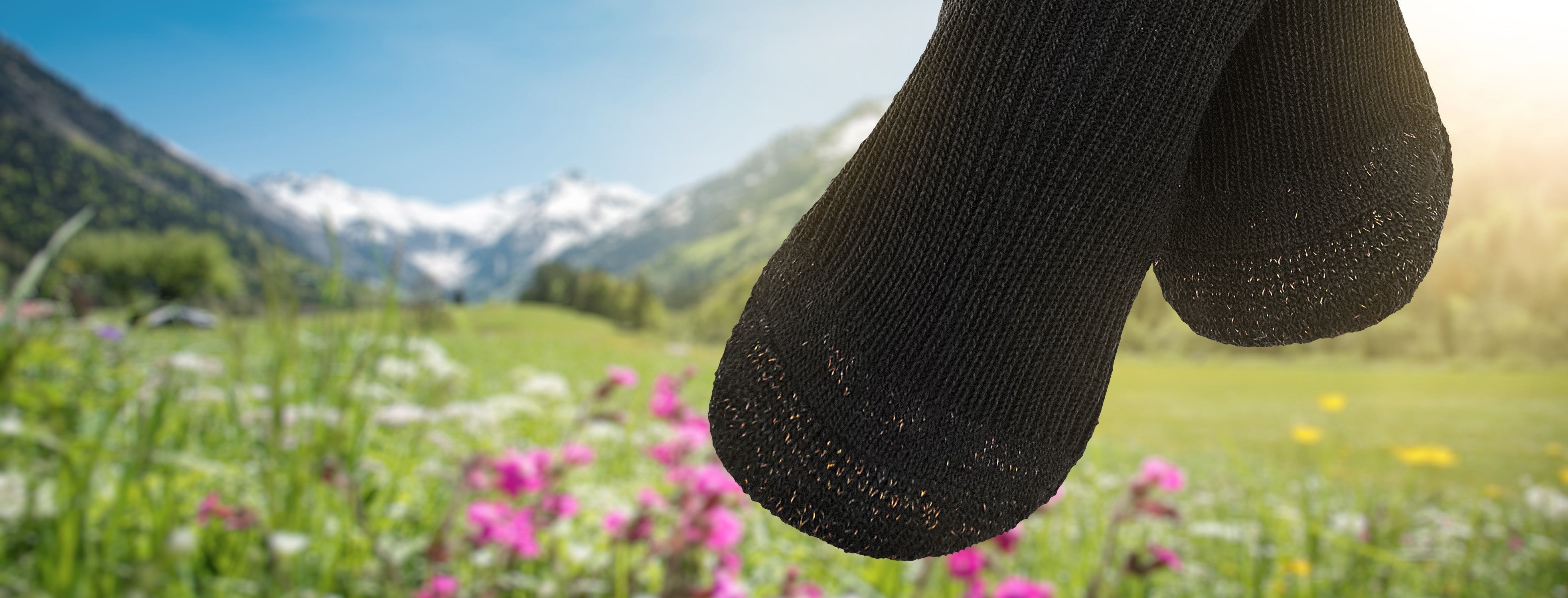
Sweaty feet are a daily problem for many people. Damp skin, unpleasant odor, and a persistent feeling of discomfort in shoes are part of everyday life for many.
However, the cause is often not the body itself, but the wrong socks.
In this article, you will learn which materials really help and how to reduce sweaty feet in the long term.
Why do sweaty feet develop?
The feet have more sweat glands than any other part of the body. A considerable amount of moisture can accumulate there each day.
The sweat itself is not the problem. The unpleasant odor only develops when bacteria multiply particularly quickly in a damp environment.
Typical causes include:
- the wrong materials, such as cotton
- poor ventilation
- synthetic fabrics
- socks that are too tight
Which socks really help with sweaty feet?
Choosing the right material is crucial.
Cotton – the most common mistake
Cotton is often considered comfortable, but it has one decisive disadvantage: it retains moisture and dries slowly.
As a result, the feet remain damp all the time and the odor becomes stronger.
Synthetic materials
Many synthetic fabrics are not breathable enough and can further promote sweating.
Merino wool as the best solution
Merino wool offers significant advantages in comparison:
- effectively regulates moisture
- naturally has an antibacterial effect
- keeps skin feeling dry
- reduces odor
For this reason, it is also used in sports and outdoor activities.
What role do copper fibers play?
Copper has antibacterial properties and can help reduce the formation of odor-causing bacteria.
Socks made from merino wool, such as those used by Bolter Socks, are particularly effective.
What should you look for when buying?
The following factors are crucial when buying suitable socks:
Material
Merino wool is significantly better suited than cotton.
Breathability
Good air circulation prevents moisture buildup.
Odor control
Antibacterial properties, for example through copper fibers, can make the difference.
Fit
Socks should not constrict and should fit comfortably.
Which socks are recommended?
If you want to reduce sweaty feet in the long term, you should pay attention to high-quality materials and workmanship.
Merino wool socks with antibacterial properties offer the best conditions here.
One possible option, for example, is Bolter Socks, which are specifically designed to meet these requirements.
Conclusion
Sweaty feet can usually be significantly reduced by choosing the right material.
In particular, merino wool combined with antibacterial technologies offers an effective solution for keeping feet dry and odor-free in everyday life.
Share:
Socks for swollen feet – What you need to look out for
Which socks really help with sweaty feet